How the Loss of Biodiversity Could Threaten Future Medical Treatments
Throughout history, civilizations have relied on diverse ecosystems for medicines to treat a wide range of ailments. Many of these ingredients are used today by the pharmaceutical industry, and scientific exploration continues to find other natural substances to support human health. The incredible biodiversity of Earth suggests that there’s much yet to explore and a corresponding need to conserve our natural resources. We will discuss some interesting medicinal applications and look at the importance of conservation.
Ocean-based medicinal approaches
Horseshoe crabs have blue blood, a very unique property in the animal world. Since it’s quite sensitive to bacteria, the blood of this species is used to check vaccines for any impurities. This has been helpful for ensuring the safety of critical vaccines like those developed for Covid-19.
Plants have also been the source of cancer-fighting compounds. For instance, vincristine, which is used to treat childhood leukemia, occurs naturally in the Madagascar periwinkle.
Another innovation that comes from marine life involves barnacles. These amazing arthropods have survived underwater for about 325 million years, often living in tidal and shallow waters. They attach themselves to a hard surface like a rock, shell of a mollusc, skin of a whale, or a ship with a strong natural glue. This adhesive served as the inspiration for a substance used today to close wounds and help them heal.
Another innovation arose from the skin of sharks. It resulted in the creation of a bacteria-proof material that’s been used to dress deep wounds and manufacture urinary catheters. Finally, diatoms or micro-algae from marine environments, have cells with porous walls that can support the delivery of drugs into a person’s body.
Land-based medical inventions
Forests, fields, and other landmasses have yielded fascinating finds that have resulted in medicine. Would you believe there’s a particular type of fungi that grows on the fur of sloths that may help in the fight against bacteria, parasites, and even cancer?
Certain drugs derived from snake venom are used to treat cardiac illnesses. In addition, a slow-growing coniferous tree called the Pacific yew, which is found in forest understories, is utilized for the chemotherapy drug paclitaxel.
Moreover, the proboscis of a mosquito that can penetrate the skin before you’re aware is the model for a new hypodermic needle that aims to significantly reduce the pain of injections.
The current crisis
Nature plays an essential role in the design of life-supporting medicines such as those used in the treatment of cancer and other serious illnesses and medical innovations that can improve the quality of life for people undergoing medical care.
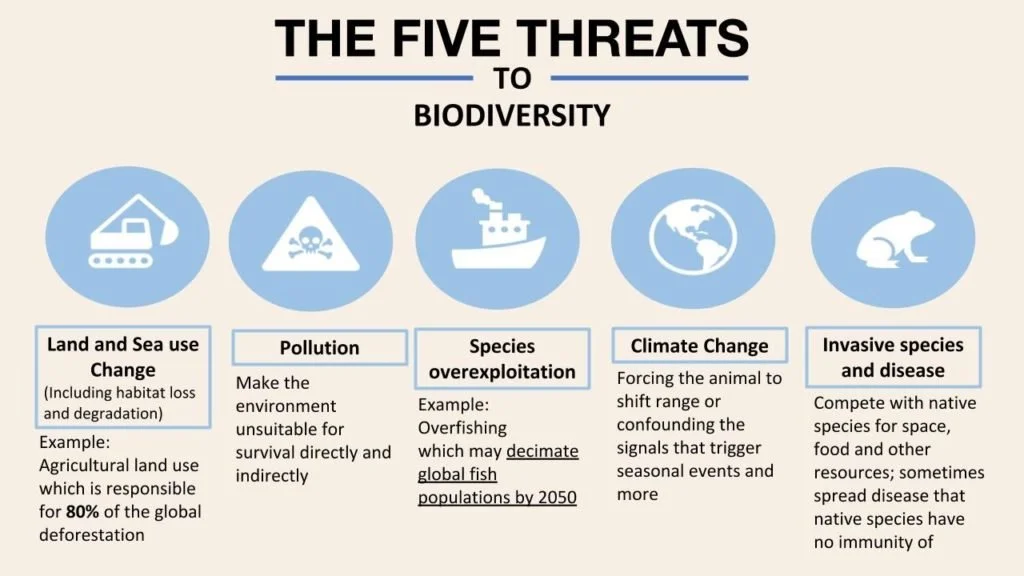
The loss of biodiversity due to climate change, habitat loss, exploitation of resources, pollution, and other human-influenced harms threaten the progress of medical treatment. Additionally, the increase in demand for naturally sourced remedies is putting particular pressure on select species.
For instance, the horseshoe crab, which is treasured in scientific circles for its blue blood, has been overharvested and is now vulnerable to extinction. Furthermore, thousands of Pacific yew are required to make enough paclitaxel for cancer trials, and this species of conifer is listed as near-threatened with its population in decline.
Not only are some species of flora and fauna that scientists currently rely on to produce drugs at risk, but we stand to lose many species that haven’t yet been uncovered.
A focus on the future
In the near term, researchers have found additional species that offer promise in medical care. For example, there’s a previously unknown marine bacterium that lives in ocean depths of some 6,500 feet and is believed to help in curing aggressive brain cancer. Diatoms are currently being examined for their efficacy in treating cancer, either through immunotherapy or in combination with other drugs.
That said, with species loss happening at a rate of 1,000 to 10,000 times greater than that of natural extinction, scientists are taking steps to mitigate the effect and preserve biodiversity as much as possible. A major concern is that chemicals derived from fungi and plants to make pharmaceuticals have such a complex composition they can’t be easily replicated in the lab.
Researchers are working to understand more about the chemistry of these specimens to find more effective and sustainable ways to extract the substances that are needed. Once the biosynthetic pathways are better understood, they can be transferred to another organism such as yeast, therefore reducing the pressure to harvest the wild species.
At the same time, other individuals are involved in initiatives to conserve crucial plants by setting up seed banks and raising awareness among governments and local communities about the need to preserve species that are important to medicine.
In closing
The untold ways that plant and animal species support medical science is truly remarkable. With sufficient efforts to preserve the planet’s biodiversity, there seems to be no end to the discoveries yet to be made.