A Look at 5 Emerging Environmental Issues
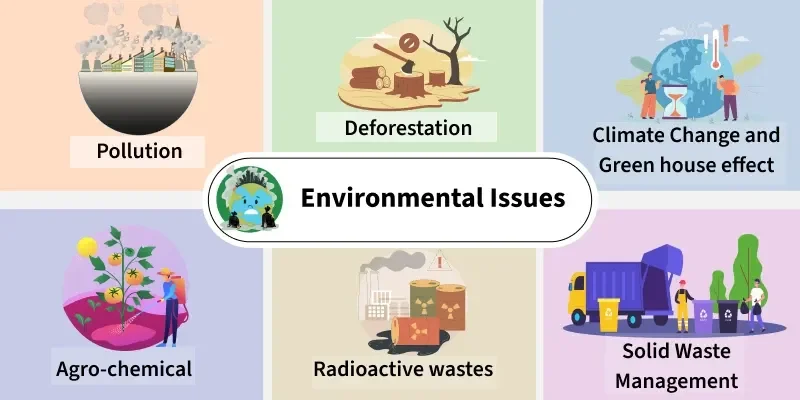
Researchers are learning more every day about Earth’s environmental issues. Each of these brings new challenges to the traditional way of life for people around the globe, to a greater or lesser extent. Even for those of us who may seem relatively unaffected by one or more of these problems, understanding them and having an appreciation for their impact is important. Knowledge is power and offers the opportunity to make a difference. Read on to learn more about five emerging environmental issues.
1. Ozone destruction
The planet’s ozone layer has a critical role to play in protecting the Earth from the ultraviolet (UV) rays emitted from the sun. This type of non-ionizing radiation also comes from certain artificial sources like tanning beds. While it helps the body create vitamin D, that’s where the health benefits of UV radiation end. Unprotected skin can overexpose people to the sun’s rays and result in some serious health consequences like cancer.
The ozone layer around the globe is slowly being degraded by substances being released into the atmosphere. These propellants typically contain chemicals such as bromine, carbon, chlorine, fluorine, and hydrogen and are used in everything from air conditioners and refrigerators to fire extinguishers, foam insulation, and solvents. While ozone is naturally created, it can be destroyed at a much faster rate by certain chemicals. For example, one chlorine atom has the capacity to eliminate more than 100,000 ozone molecules.
2. Plastic pollution
The convenience of plastics has had dire repercussions for the environment. Approximately 91 percent of all plastic produced isn’t recycled and most plastics can take up to 400 years to decompose. About 14 million tons of plastic waste gets into the oceans each year where it damages ecosystems and harms marine life. When this material isn’t properly managed with recycling programs, it can do untold damage in other ways, too. Plastic garbage might clog drainage systems, which adds to flooding, while disposing of plastic by burning releases harmful chemicals.
Certainly, there are efforts underway to develop plastic alternatives. Even so, the problem persists. It’s projected that annual plastic production has the potential to reach 736 million metric tons by the year 2040.
3. Desertification
Basically, desertification is what happens when vegetation is diminished over time and eventually disappears entirely. This creates a desert climate where there once may have been more fertile land. It typically occurs with arid or semi-arid areas that have grasses or shrubs, but it can happen across other types of landmasses, too. It’s suggested that some two-thirds of the planet is currently undergoing desertification.
The causes are many and often multi-faceted. Human activities that contribute to it include deforestation, overuse of aquifers, and agricultural practices that are unsustainable. Climate-related impacts include extreme weather events like drought, fires, and hurricanes. When river beds dry up and the land is devoid of vegetation, food and water become scarce for humans and animals alike. Local populations are then at risk of dehydration and malnutrition.
4. Water shortages
According to a 2025 report from the United Nations, 2.1 billion people worldwide lack access to safe water. Add to that the fact that 3.4 billion people don’t have safely managed sanitation services.
Over the recent decade, severe water shortages have become an increasing problem in many parts of the world. For instance, in India erratic monsoon rainfall patterns have impacted rural regions and forced them to increasingly rely on groundwater for agriculture. Furthermore, some 200,000 of this country’s population dies annually due to not having clean water. Southern Africa is another case in point. Here, a drought that lasted several years led to serious food insecurity.
Water shortages around the globe are attributed to climate change, rising temperatures, unsustainable agricultural methods, overpopulation, and poor water management practices. This problem leaves many in dire straits, vulnerable to dehydration, malnutrition, and disease. In addition, water scarcity presents challenges for crop cultivation and caring for livestock.
5. Loss of biodiversity
A global environmental issue is the loss of biodiversity. Humanity’s footprint continues to grow as the world’s population surges, putting added pressure on valuable natural resources, consuming more disposable goods, and spreading out from urban centers. Rapidly expanding infrastructure and increasing commercial development put a tremendous strain on local habitats and cause the loss of resident species. In some regions, human expansion into forests, grasslands, and mangroves is driven by agricultural development.
Based on a 2020 report by the World Wildlife Federation, there was an average 68 percent decline between 1970 and 2016 in the population size of amphibians, birds, fish, mammals, and reptiles. This suggests a significant reduction in biodiversity. While some creatures lose their habitat, other animal species, such as pangolins, seahorses, and sharks, are captured for the illegal wildlife trade, dramatically diminishing their numbers.
In closing
Environmental threats continue to emerge around the world. Ozone destruction, plastic pollution, desertification, water shortages, and biodiversity loss are five notable examples.