Spotlight on 7 of the Top Environmental Issues
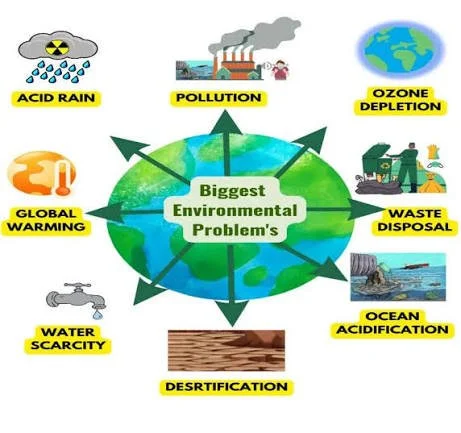
Earth's ecosystems are facing a wide range of environmental problems. Some issues have more far-reaching consequences than others. The following are seven of the most significant environmental challenges facing the planet today.
1. Air pollution
Whether in cities or rural areas, air pollution is a significant environmental threat. The main contributors are vehicular traffic, factories, and wildfires. While developing nations have difficulty in managing this type of pollution due to less effective or absent government regulations, countries with strict controls still find this problem to be a challenge.
Air pollution poses serious health risks, particularly for children whose lungs are developing and people who are immunocompromised or who have respiratory illnesses. Almost 280,000 deaths have been linked to polluted air, based on a 2023 European Union study. Researchers in the United States have discovered that air pollution originating from the oil and gas industry has resulted in 91,000 premature deaths and 1,610 incidences of cancer annually across the country.
2. A warming planet
It may come as a surprise to some that the years from 2015 to 2025 were among the warmest ever recorded. As greenhouse gases emissions are release into the atmosphere, they trap heat and raise the surface temperature of the Earth. In turn, this contributes to hotter heat waves that last longer than ever.
The gases involved include carbon dioxide, nitrous oxide, and methane, each with the ability to last a long time in the atmosphere. This means we can expect a long-term global temperature increase and all the problems that ensue. Even if greenhouse gas emissions were stopped entirely, the planet would continue to warm over the coming years.
3. Deforestation
The main reason for deforestation is agriculture, wherein land is cleared for crop cultivation or livestock grazing. Forestland is essential for several reasons that include supporting a variety of species, absorbing carbon dioxide from the atmosphere, and preventing soil erosion
It’s predicted that if deforestation continues unabated at the present rate, by 2030 only 10 percent of the planet’s forests may remain. A woodland the size of 300 football fields is destroyed every hour around the world. Brazil, Indonesia, and the Democratic Republic of Congo have the highest amount of deforestation with Brazil’s Amazon rain forest losing 1.5 million hectares every year.
4. Disappearing wetlands
The wetlands are shrinking in area due to a number of threats. These include agricultural expansion, damming of rivers and lakes, industrial development, invasive species, water pollution, and rising water levels.
The importance of preserving the wetlands cannot be overstated. These areas are home to a unique range of species, provide food and a livelihood for people who cultivate rice, and are responsible for reducing the impact of cyclones and similar dangerous storms.
5. Extreme weather
Unprecedented weather occurrences are one of the major signs of climate change. As such, it’s an environmental problem that people around the world can relate to. So-called storms of the century are happening with greater frequency, bringing heavy precipitation, hurricanes, and tornados.
Droughts, tsunamis, and wildfires accompany these weather events. Moreover, temperatures can be considerably higher or lower than previously recorded.
Extreme weather is hardest on children and older people who are more vulnerable to drowning, heatstroke, hypothermia, and some of the deadly diseases that follow devastating floods, hurricanes, and tsunamis.
6. Global hunger
World hunger has continued to increase over the course of the last decade. It’s a persistent and pervasive problem that an estimated one in nine people experience daily. This crisis is linked to climate change in that the disruption to the growing seasons and rainfall patterns, along with more frequent droughts and floods, all play a part in food security.
With ongoing hunger comes malnutrition, which has severe consequences for children, stunting their growth, impairing cognitive development, and making them more susceptible to infectious diseases. The growing global food insecurity is set to impact hundreds of millions of people, the United Nations has warned.
7. Habitat destruction
Another serious environmental concern is the destruction of habitats. Infrastructure expansion and commercial development play a role in this, as does climate change. When a species loses its habitat, there’s a risk that it will become extinct or at least the size of its population may be greatly reduced. Such a change has a domino effect on other flora and fauna due to the interdependent nature of ecosystems.
The delicate environmental balance is disturbed and the food chain is disrupted. This may mean certain populations of animals multiply quickly and displace others. In contrast, a particular species might have less prey or vegetation to sustain it and could die off. In addition to food and water, habitats provide shelter and protection where native animals can raise their young.
In closing
Collectively, these issues remind us that environmental challenges are interconnected and require thoughtful, long-term solutions.